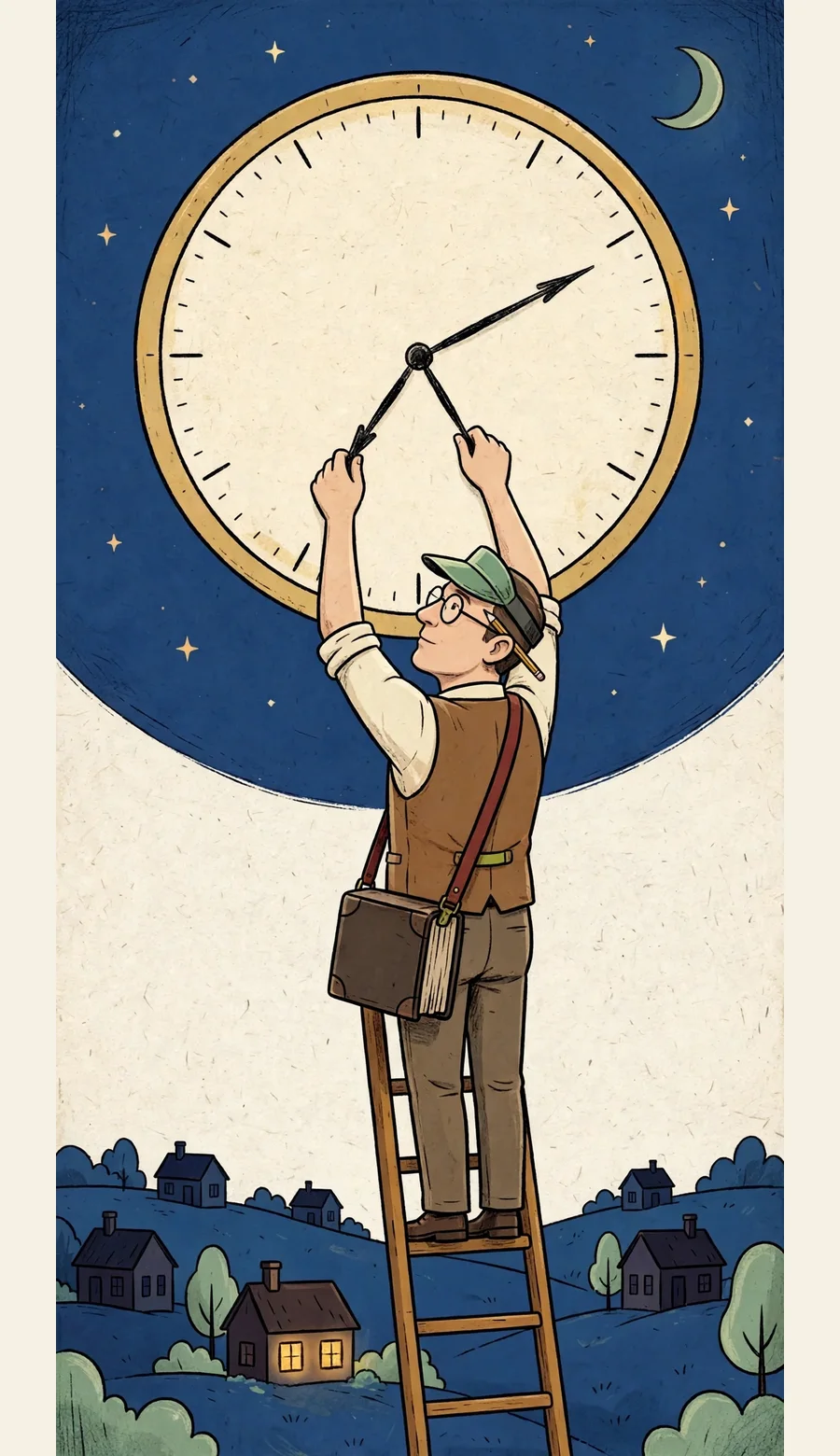
The facts of the issuance are not in dispute.
At 2:00 a.m. local time on Sunday, November 1, daylight saving time ended in most of the United States. Clocks moved back to 1:00 a.m. The hour from 1 to 2 happened twice. Sunday, November 1, 2026 contained 25 hours, and every person in the observing states received one of them, free of charge, no forms required.
This makes the fall clock change the largest single distribution of time in the national calendar. Spring takes an hour from everyone at once. Fall hands one back to everyone at once. More than 300 million people were issued a full extra hour on the same night.
By Monday morning, this publication could not find them.
Nobody interviewed in the course of ordinary life could produce their hour. Nobody had set it aside. Nobody could say, with any precision, what it had been spent on. The hours had been received, acknowledged, widely celebrated in advance, and then absorbed into the general population without a trace.
The Daily Spread opened an audit.
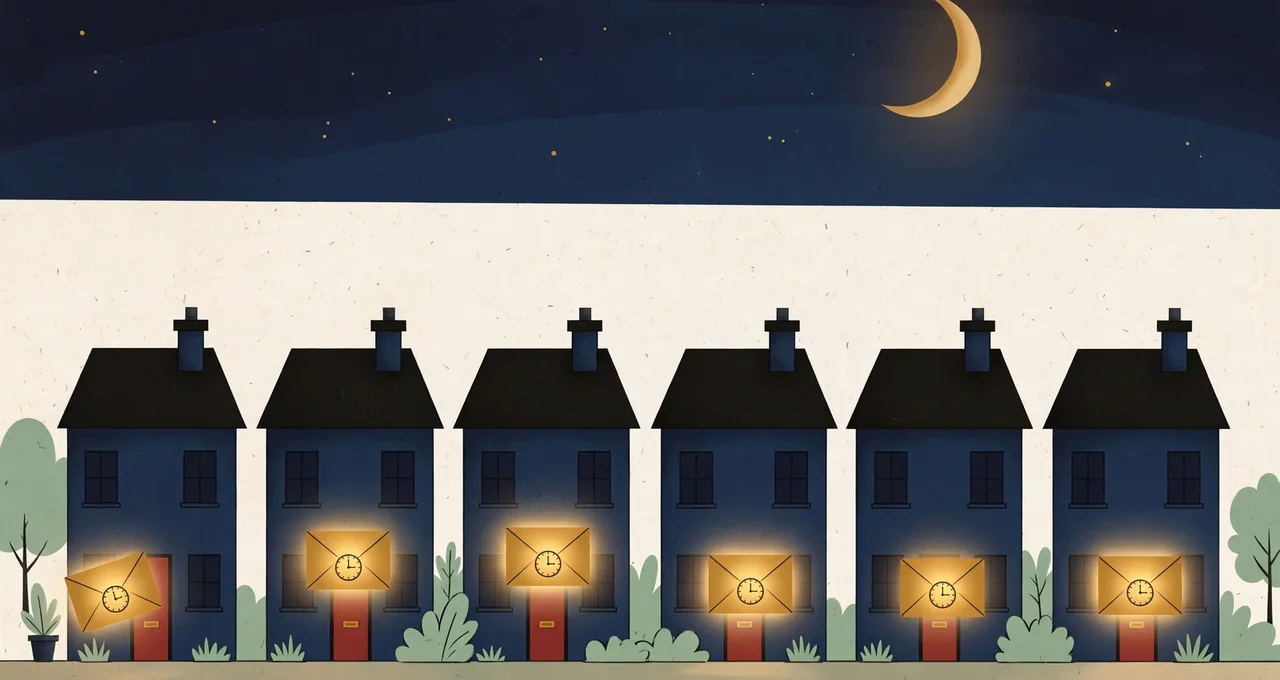
Exhibit A: the only documented recipients
There is exactly one group of people who can prove where their extra hour went, because they were required to write it down.
Night shift workers who were on the clock at 2:00 a.m. worked the 1 a.m. hour twice. Federal labor guidance is plain on the point: employers must credit all hours actually worked, so a twelve hour shift that crossed the change counts as thirteen. Their extra hour exists. It is on a timesheet. It has a supervisor.
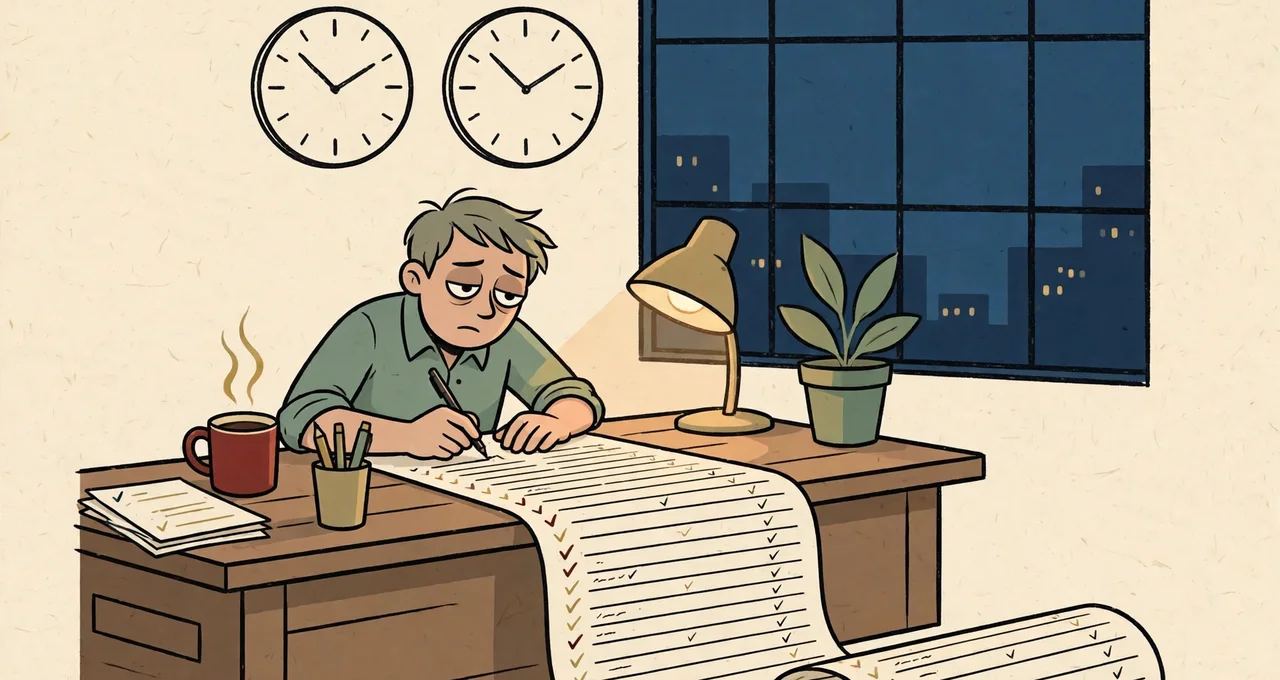
For everyone else, the hour arrived while they were asleep, on the theory that they would spend it sleeping too. This was the first error in the system, because it turns out the recipients largely did not.
The sleep ledger
The official story of the fall change is an extra hour of sleep. The measured story is shorter.
In a study of 11,780 adults, average sleep on the Sunday of the fall change rose by 33 minutes compared with the Sunday before. Thirty three. Not sixty. Even against the following Sunday the gain was only 38 minutes, which means the most generous accounting ever produced for this event still leaves 22 minutes unaccounted for.
A second count, published in October 2026 by the sleep tracking company Withings from nearly 240,000 recorded nights between 2023 and 2025, found even less. On the night the clocks fell back, Americans slept an average of just 11 minutes longer than on a typical Saturday. Eleven. And the small bonus did not survive the week: in the days after, people woke roughly 25 minutes earlier each morning, and by the next Saturday they were sleeping slightly less than usual.
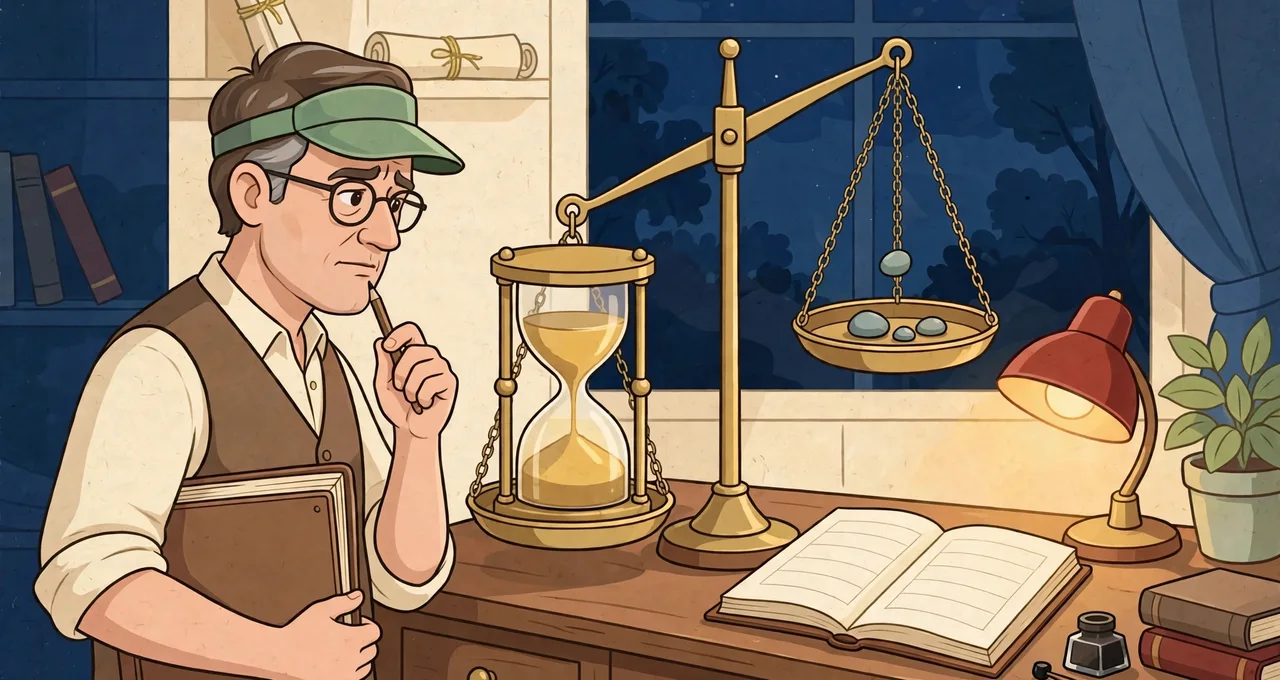
Read those two counts together and the audit takes shape. The country was issued 60 minutes. Somewhere between 11 and 33 of them showed up as sleep. The rest is missing, and the measurers disagree about the size of the loss, which is what always happens when something valuable disappears.
The likely explanation is embarrassingly human. Faced with a free hour, people spend it the way they spend a found banknote: immediately, and the night before. They stay up later on Saturday because the hour is coming. They wake on Sunday at their body clock time, which is now an hour early on the new clock, and lie there doing arithmetic. The hour is not saved. The hour is pre-spent, then partially clawed back by a body that does not read government announcements.
The control group
Every good audit needs a control group, and this one has two states and five territories.
Hawaii opted out of daylight saving time in 1967, reasoning that near the equator the daylight barely changes across the year, so the whole exercise buys nothing. Arizona followed in 1968, after trying it for a single season, on the grounds that in a desert summer nobody is asking for an extra hour of evening sun. American Samoa, Guam, the Northern Mariana Islands, Puerto Rico, and the United States Virgin Islands also stay put all year.
These places received no extra hour on Sunday. They also lost none in March. Their clocks have been telling the same story for decades, and, notably, they are not the ones conducting audits.
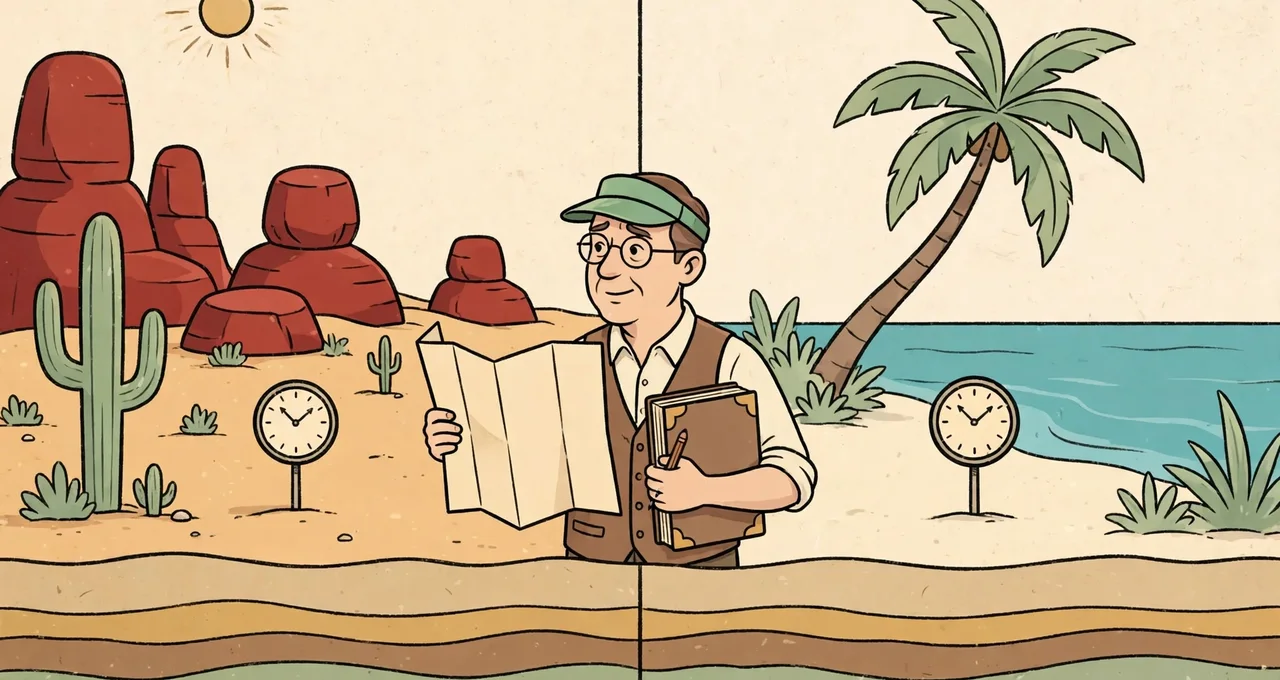
One further wrinkle deserves its own footnote in the national record. The Navajo Nation, which crosses into Arizona, does observe daylight saving time, to stay in step with its communities in Utah and New Mexico. The Hopi Reservation, entirely surrounded by the Navajo Nation, does not. On Sunday morning, in one corner of one state, an hour was issued, surrounded on all sides by people who had declined delivery, inside a larger region that had opted out entirely. Time, in that part of the map, is a layer cake.
A short history of the hour
It helps to know what the hour is, legally speaking. It is not a gift. It is a refund.
Daylight saving time first became federal law in the United States in 1918, as a wartime fuel saving measure, in the same act that created the national time zones. The Uniform Time Act of 1966 ended the local chaos of every town choosing its own dates and set one national schedule, while letting states exempt themselves, which is how the control group above got its papers. The Energy Policy Act of 2005 stretched the season to its current shape, second Sunday in March to first Sunday in November, in effect from 2007.
So the hour issued on Sunday was the same hour collected on Sunday, March 8 of this year, held by the federal government for just under eight months, and returned without interest. Every spring the country makes this loan. Every fall it is repaid in full and celebrated as found money.
Congress could end the arrangement. In July 2026 the House of Representatives passed the Sunshine Protection Act, which would make daylight time permanent and stop the twice yearly change for good. The Senate has not taken it up. The loan program therefore continues, and the next collection is scheduled for March 14, 2027.
Findings
This publication's audit concludes as follows.
The extra hour is real. Sunday genuinely had 25 of them, and the repeated hour from 1 to 2 a.m. is the closest thing the calendar offers to a buy one, get one sale.
The extra hour is also, for most recipients, already gone. The best measurements find 11 to 33 minutes of it converted into sleep. A working theory of the remainder, offered here as interpretation and not as measurement: some was spent late on Saturday night, in advance. Some was spent awake at the wrong end of Sunday morning, watching the clock read a time the body did not believe. Some passed twice through the same dark hour, lived by night owls and night shifts, the only citizens who experienced the bonus in person and, in the workers' case, got paid for it.
And some of it was probably spent the way all windfalls are spent, on nothing in particular, which is the most human use of an hour there is.
The audit is now closed. The hours will not be recovered. They were never really missing. They were issued at 2 a.m. to a sleeping nation, and a sleeping nation spends time the way it always does: without keeping receipts.
Next distribution: spring, when the government takes the hour back, and everyone notices. People always notice a collection. It is the refunds that go missing.