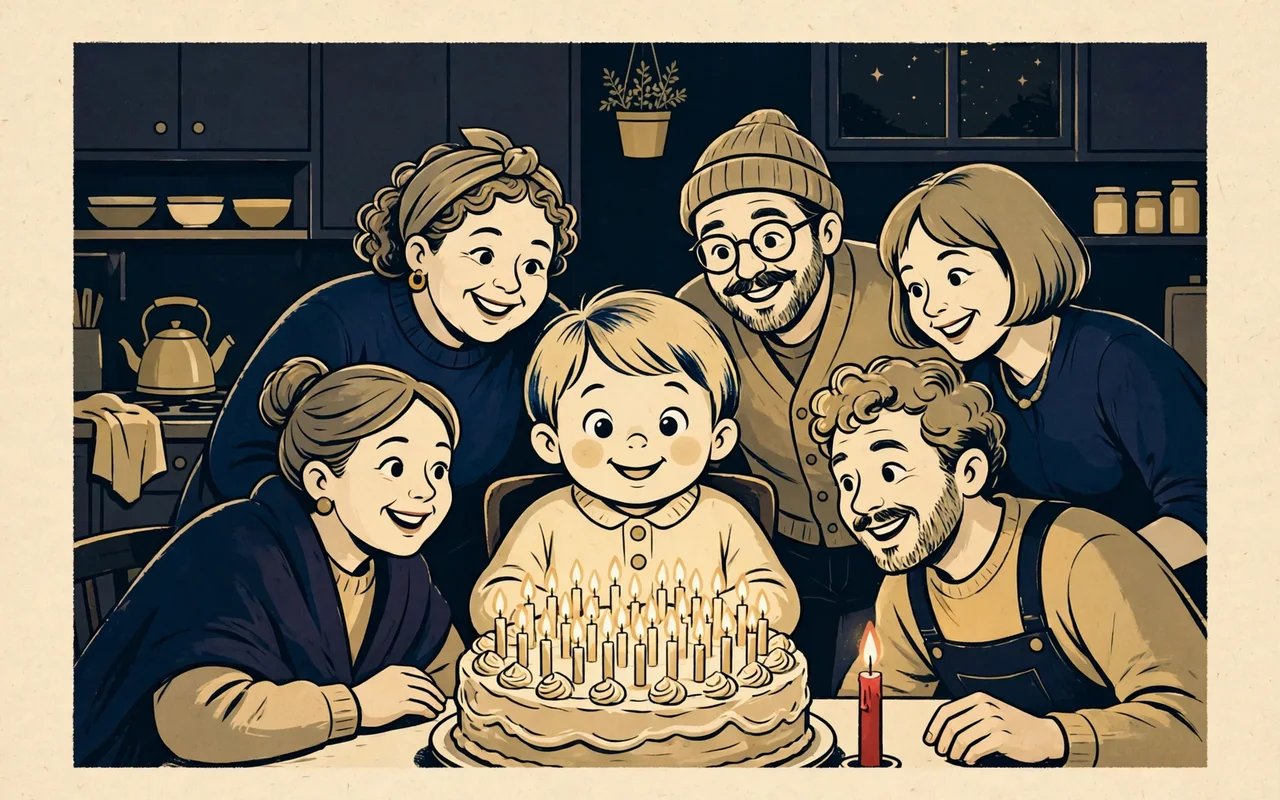
Let us describe a birthday party the way an alien would report it.
A human has survived another trip around the sun. Nobody steered. Nobody pedaled. The planet did all the work. Still, a party is declared.
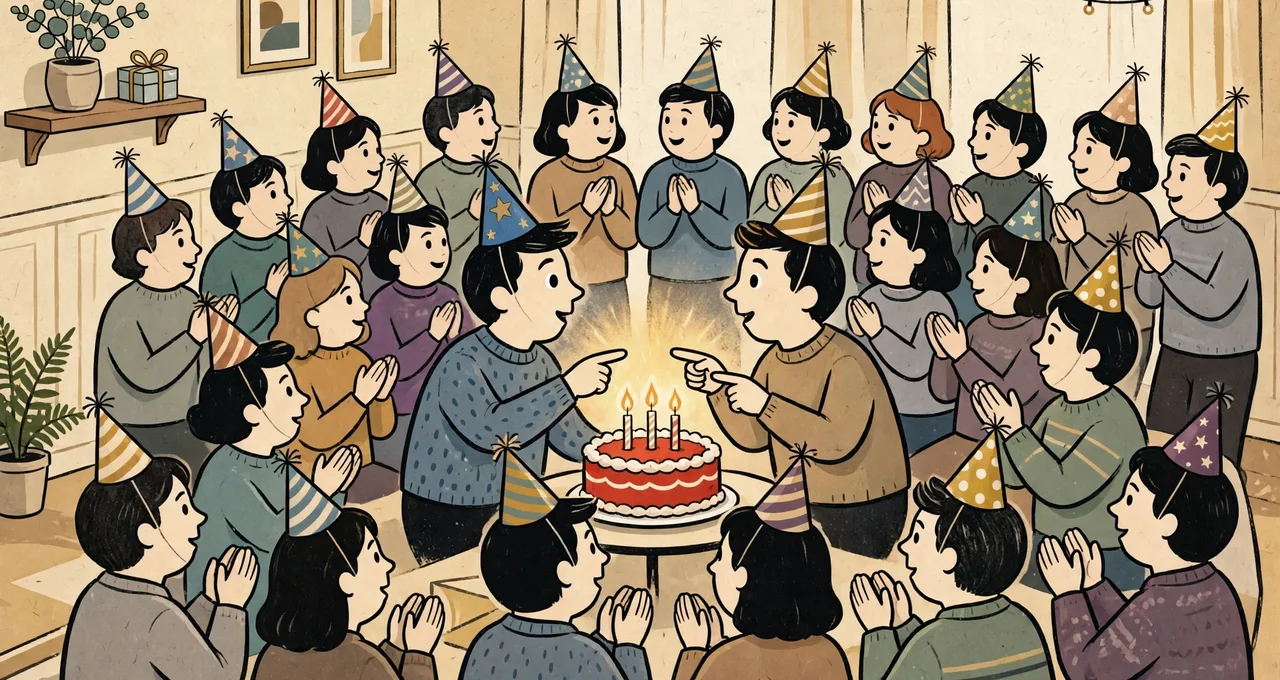
The other humans hide. They whisper. They balance a cake covered in small, controlled fires. Then they burst in singing the same four lines over and over, louder than necessary, while the guest of honor stares at the flames and tries to remember how lungs work.
Then everyone applauds. Not for the singing. The singing is terrible. They applaud because one person blew hard enough to make a dessert stop burning, and now everyone gets to eat the dessert they just breathed all over.
A kid understands this party instantly. Of course the cake is on fire. Of course you make a secret wish. Of course you cannot tell anyone, or the wish breaks. That is not strange to a kid. That is Tuesday logic.
Adults pretend it is normal because adults have had more practice. But the facts underneath are even weirder than the party, and the facts are the best part.
It started with a man becoming a god before lunch
The first birthdays on record were not for regular people blowing out regular candles in a kitchen. Regular people did not get birthdays. Gods got birthdays. Kings got the deluxe version.
In ancient Egypt, around 3000 BCE, the big date for a pharaoh was not the day he was born as a baby. It was the day he was crowned, because that was counted as the day he was born as a god.
Read that again slowly. You could live for years as a normal, if very fancy, human, then put on the crown and get issued a brand new birthday, god edition. No cake yet. No party hats. Just a complete upgrade in species, with paperwork.
The Greeks gave the idea to their gods properly. For Artemis, goddess of the moon, worshippers offered round cakes shaped like the moon and set them with lit candles so the cakes would glow.
A glowing moon cake. For a moon goddess. On an altar.
That is the ancestor of your grocery store sheet cake sitting under fluorescent lights while a seven year old negotiates for the corner piece with the most frosting. The line from sacred glowing moon cake to supermarket cake is long, but it is a straight line, and every step gets a little less majestic and a lot more delicious.

The popular story says candle smoke carried prayers up to the gods, which is where the wish sneaks into the party. This publication has to be honest here, in the middle of the fun. Historians who went looking for a solid Greek paper trail found it thin. The Greeks may have lit the first fire. The country that wrote down the rules, in detail, with the seriousness of a building code, was Germany.
Hold that thought. First, Rome ruins the guest list.
Rome invites the public, then checks IDs at the door
The Romans were the first to throw birthday parties for ordinary humans, with dinners, gifts, and speeches. This sounds like progress until you hear the fine print.
Ordinary meant men.
Women waited. And waited. The first recorded birthday celebration for a woman does not show up until the twelfth century. That is thousands of years of birthdays where half the room was expected to help with a party they were not officially allowed to have for themselves.
Imagine being the person who brings the snacks to history, for century after century, and then finally, in the 1100s, someone says fine, you may also have a day. The patience required is difficult to measure with modern equipment.
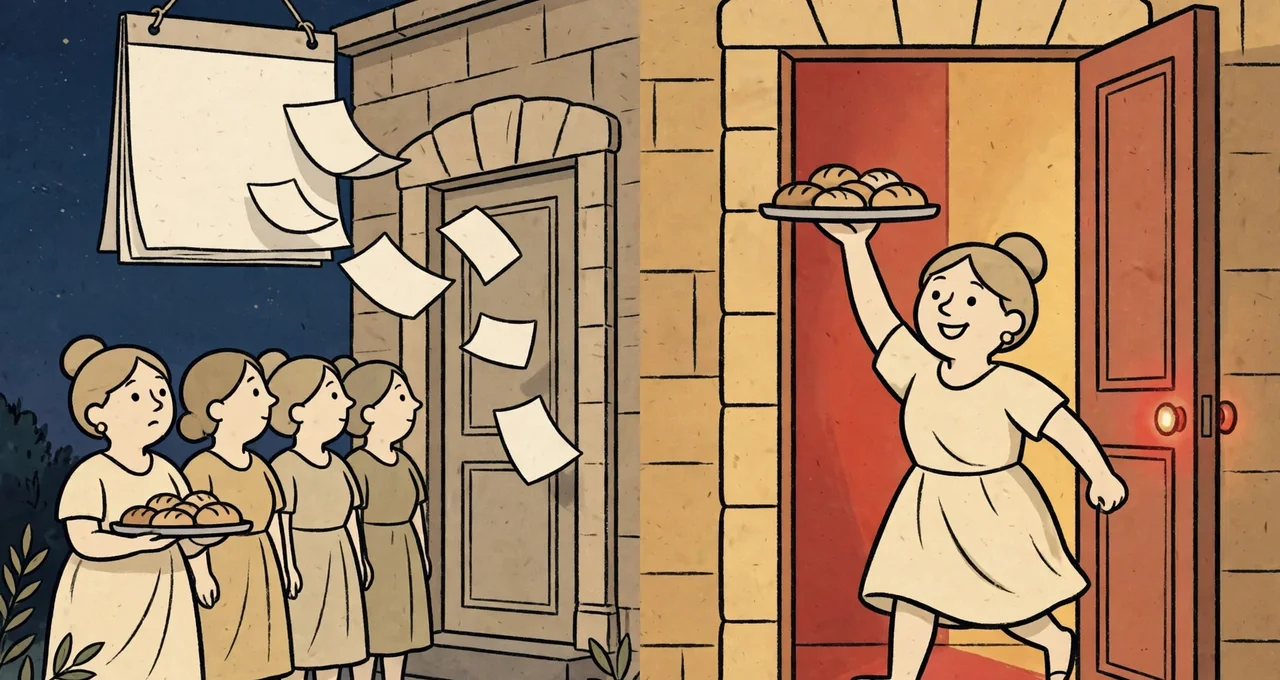
The early church wanted none of it. Birthdays were pagan business, noisy and suspicious. Saints were honored on the day they died instead, which is why the calendar of saints reads like a calendar of dramatic exits rather than arrivals.
So for centuries the birthday survived the way all the best weird customs survive. Quietly. In houses. In farm kitchens. Passed along by families who kept doing it because the kids liked it and the cake was good and nobody from headquarters was watching.
Then Germany took this folk custom, sat it down, and gave it a rulebook with the energy of a tiny, very serious safety inspector.
Germany writes the rulebook, and the rulebook is unhinged
The birthday party you recognize, the child, the cake, the candles, the secret wish, the one big breath, was assembled in eighteenth century Germany at a children festival called Kinderfest.
Here are the rules, as they were recorded. Try not to picture a parent saying them with total confidence, as if this is obviously how fire and wishes work.
One. The cake arrives in the morning, already lit.
Two. There is one candle for every year of the child life, plus one extra candle. The extra one is called the light of life. It stands for the hope that the child gets one more full year. In a century when that was genuinely uncertain, that extra candle was not cute. It was the whole point, standing there in frosting.
Three. The candles burn all day. All day. When one burns down, you replace it, so the flame never goes out before evening. Somewhere in Germany, a parent spent an entire birthday on candle replacement duty, walking past with a fresh candle like a lighthouse keeper with a dessert shift.
Four. Nobody blows anything out until after dinner.
Five. The child makes the wish in silence. In total silence. Tell anyone the wish and it will not come true.
Six. The child must blow out every candle in one breath. Leave one flame standing and the wish fails. One flame. One smug little flame can cancel the entire operation.
Seven. The smoke rises, and the rising smoke carries the wish up.
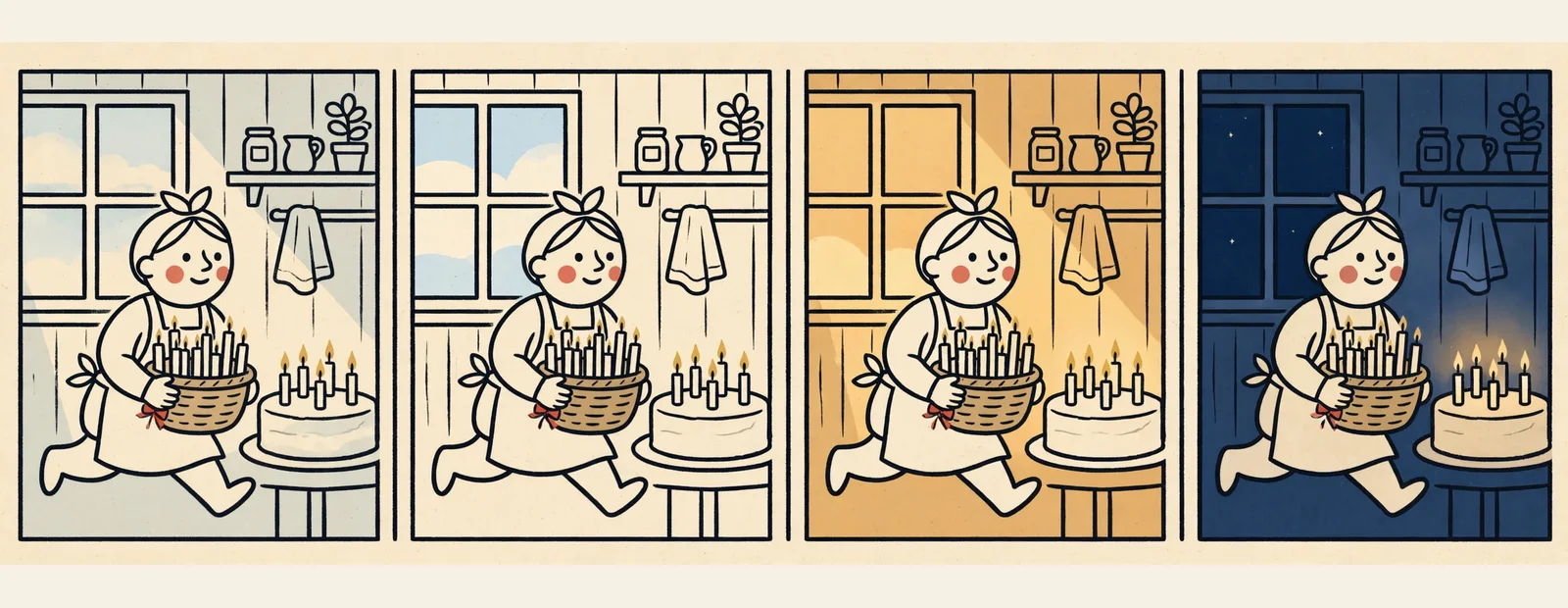
Now look at your last birthday and count how many of those rules you obeyed without thinking. The secrecy. The one breath. The panic when one candle refuses to die and relights itself like it has unfinished business. The extra candle some families still add and cannot explain.
You were following an eighteenth century German safety and spirit protocol, designed in part because parents believed children were at special risk from evil spirits on their birthdays, and a flame kept burning all day worked as a kind of guard light.
A guard light. Made of cake. That you eat later.
By 1746 there is a written account of a birthday cake carrying one candle for every year of a man life. The modern party was fully assembled by then. It has been running ever since, largely unedited, which explains a lot. Nobody updates the software on a tradition that involves free cake.
The song was a hostage, and the ransom was real
Now for the part where the story leaves the kitchen, walks into a courtroom, and stays there for eighty years.
In 1893, two sisters from Louisville, Kentucky, Patty Hill and Mildred Hill, published a songbook for kindergarten teachers. It opened with a greeting song called Good Morning to All. The melody was theirs.
Somewhere after that, in classrooms nobody documented, somebody fitted the words happy birthday to you onto that melody. It spread the way playground property spreads, kid to kid, class to class, no inventor in sight, no receipt, no permission slip.
In 1935, a publisher registered a copyright that covered a piano arrangement of the birthday song. An arrangement. Not, as it turned out, the lyrics everyone was singing. That one registration became the foundation for one of the most profitable claims in music history.
The claim changed hands. In 1988 it was bought as part of a catalog sale worth 25 million dollars and landed with Warner and Chappell, which then collected licensing fees for the song for decades. Films paid. Television shows paid. Restaurants paid. The total was reportedly about two million dollars a year.
Two million dollars a year. For four lines. That most people sing slightly wrong, at the wrong speed, starting on three different notes at once.
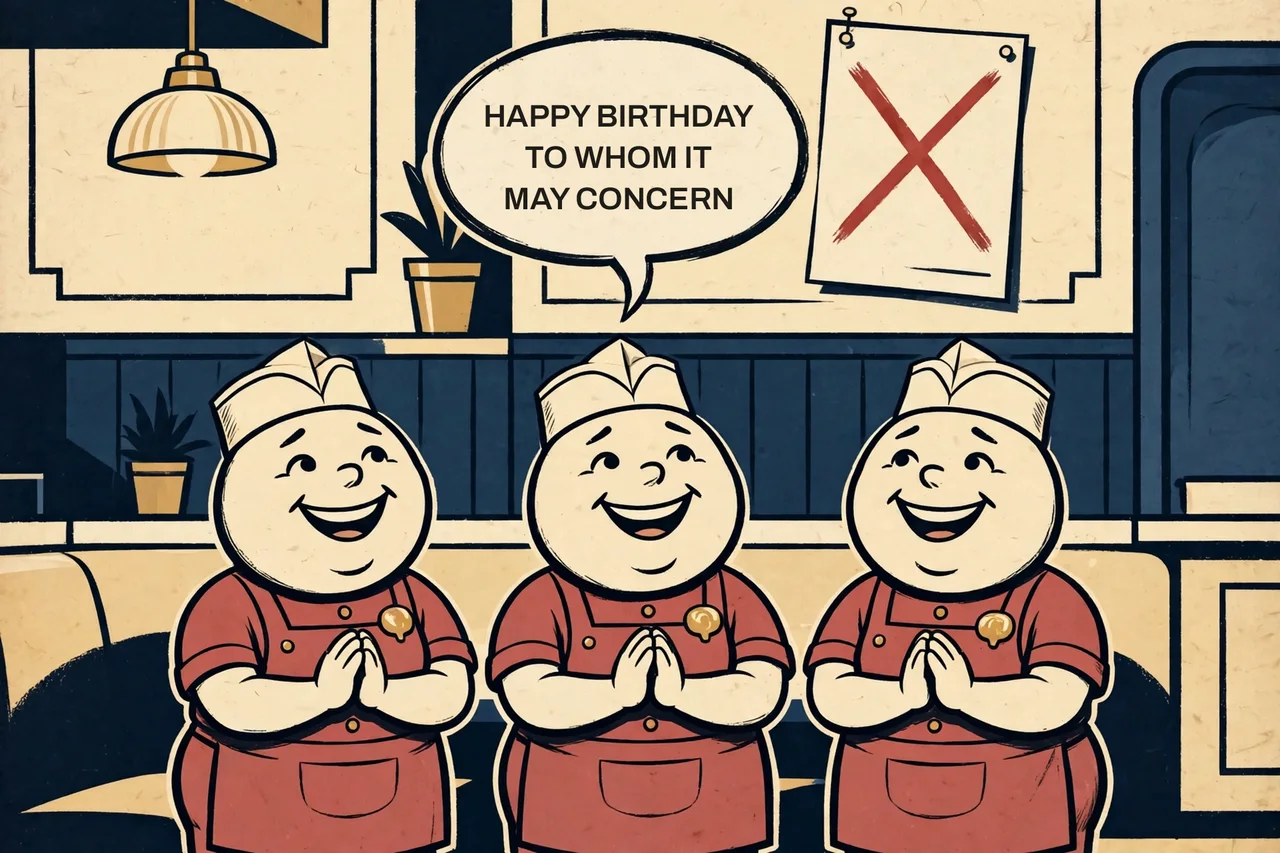
This is why, for years, chain restaurant servers sang you a replacement birthday song, with different words, while smiling in a way that suggested they would rather be anywhere else on Earth. They were not being creative. They were dodging an invoice. The company had done the math and decided a mildly confusing original song was cheaper than your real one.
The rescue came from a documentary. In 2013, a filmmaker making a movie about the song itself was charged fifteen hundred dollars to use it, and sued instead. In September 2015, a federal judge ruled that the 1935 registration had only ever covered that piano arrangement, and that there was no evidence the Hill sisters had ever transferred the birthday lyrics to anyone.
The claim collapsed. In 2016 the settlement landed. Fourteen million dollars was repaid to people and companies who had been charged since 1949, and the song went into the public domain, free for everyone.
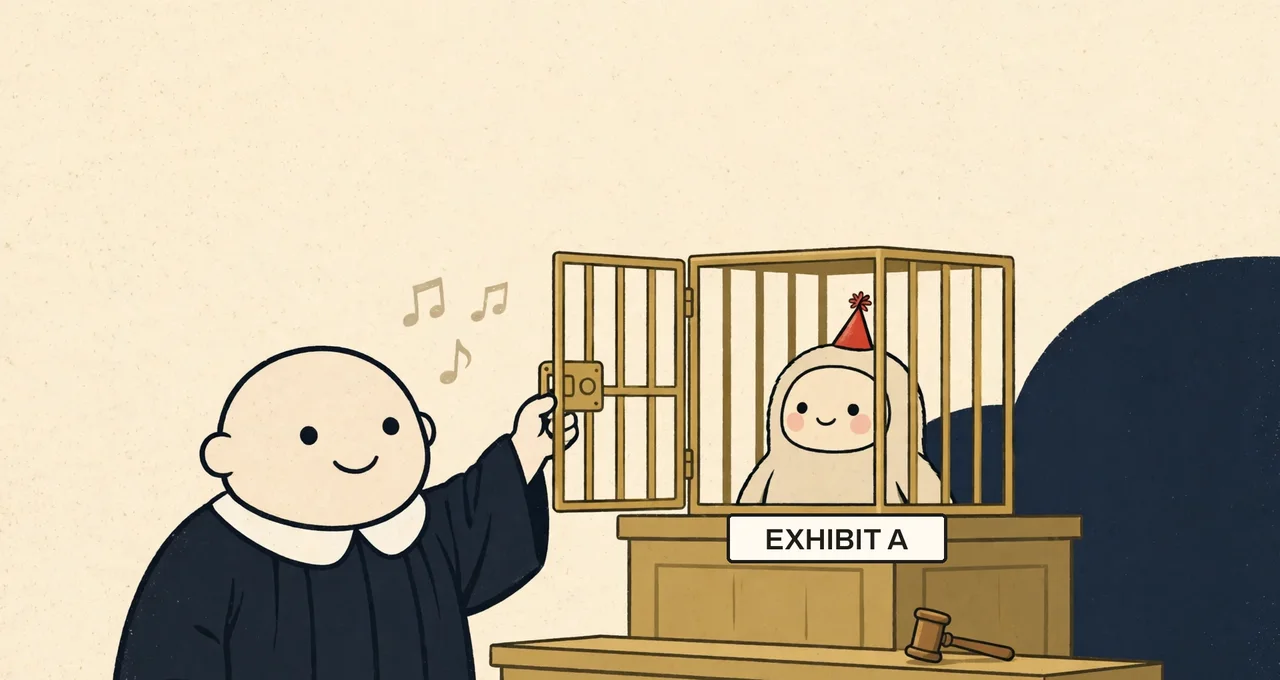
So when your family sings it now, off key, around a flaming cake, in a dark kitchen, that performance is fully legal in a way it was not for your grandparents. The federal court system has given exactly one birthday present to every person at the same time, and this is it. It does not wrap well, but it fits everyone.
The numbers are rude, and the cake study is ruder
Put twenty three people in a room. Just twenty three. The odds that two of them share a birthday are better than half.
People refuse to believe this, every time, with their whole chest. It feels wrong. There are 365 possible birthdays, and only twenty three people, so surely everyone gets their own special square on the calendar.
The trick is pairs. You are not checking one birthday against the room. Every person is checking against every other person, and pairs multiply fast, like rabbits with calendars. Your birthday feels rare because it is yours. Statistically, it is shared property with excellent public relations.
The birth records agree, and they brought receipts. United States records from 1994 to 2014 cover more than eighty five million births. The single most common birthday is September 9, at about twelve thousand three hundred births a year. The top of the chart is crowded with September birthdays, which is a polite way of saying a lot of people were conceived around the December holidays. The records do not comment further. The records do not need to.
The least common birthday that happens every year is December 25, at about six thousand six hundred births, because scheduled deliveries politely step aside for Christmas. Babies who arrive that day do so on their own schedule, unbothered, already committed to sharing a spotlight with the most famous birthday in the world.
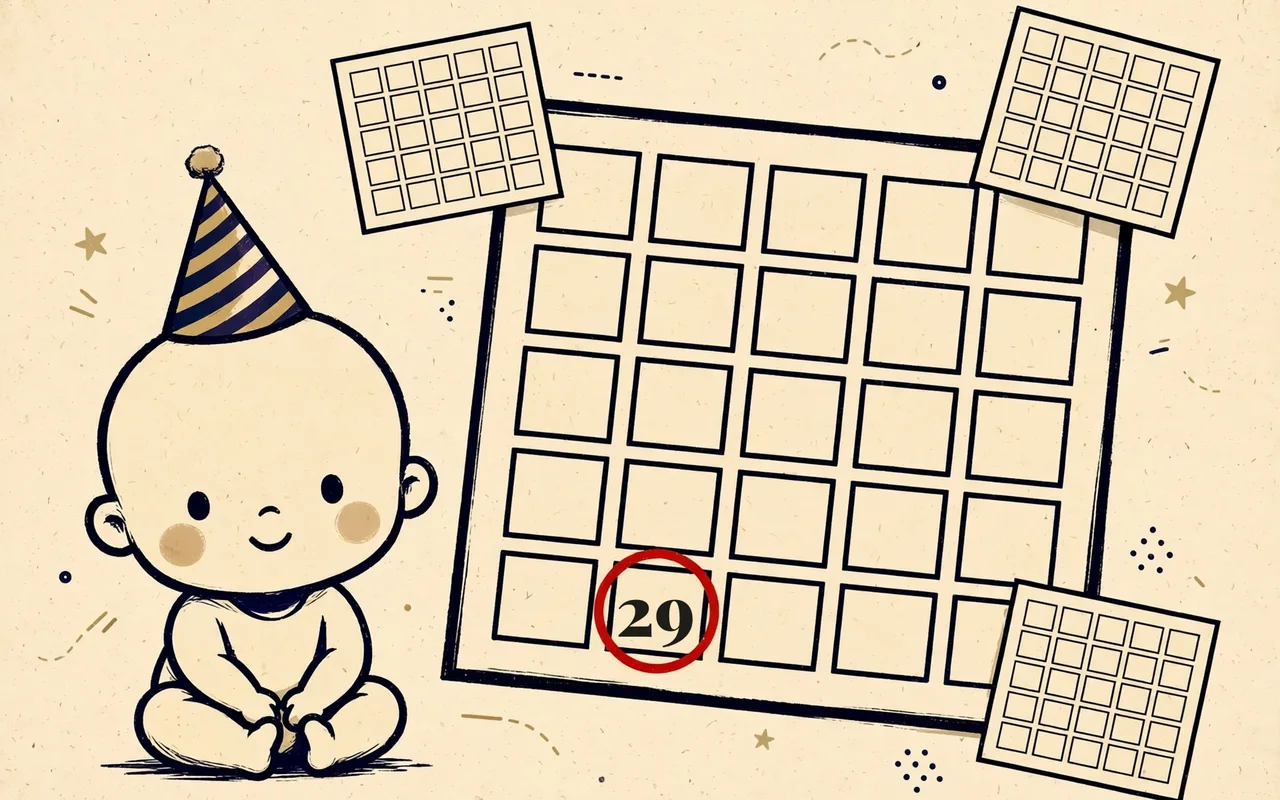
And then there is February 29, the rarest of all, home of the leap year babies, people who get an official birthday roughly once per presidential term and have stayed remarkably calm about it. Everyone else complains when their birthday lands on a Monday. Leap babies get a Monday every four years and call it a party.
Finally, the cake. Brace yourself.
In 2017, researchers at Clemson University ran the study nobody asked for and everybody suspected. Volunteers ate pizza first, to simulate party conditions honestly, which is already excellent science. Then they blew out candles on a frosted cake. Then the researchers measured the icing.
Blowing out the candles raised the bacteria on the icing by fourteen hundred percent on average. One enthusiastic blower multiplied it by one hundred twenty times.
One hundred twenty times. From one breath. Over a cake that other people then ate with smiles on their faces.

The researchers, to their eternal credit, said to eat the cake anyway. This publication agrees, while noting that the cake has now been a moon offering, a spirit guard, a legal exhibit, and a science experiment, and it has survived all four jobs without complaining.
The rest of the world looked at this party and said, hold my noodles
If the American version still sounds tame, the rest of the world has filed its own paperwork, and some of it is glorious.
In Korea, birthdays come with miyeok-guk, a seaweed soup that honors mothers, which is either the sweetest entry on this list or a very effective way to make sure nobody forgets who did the actual work on the original day.
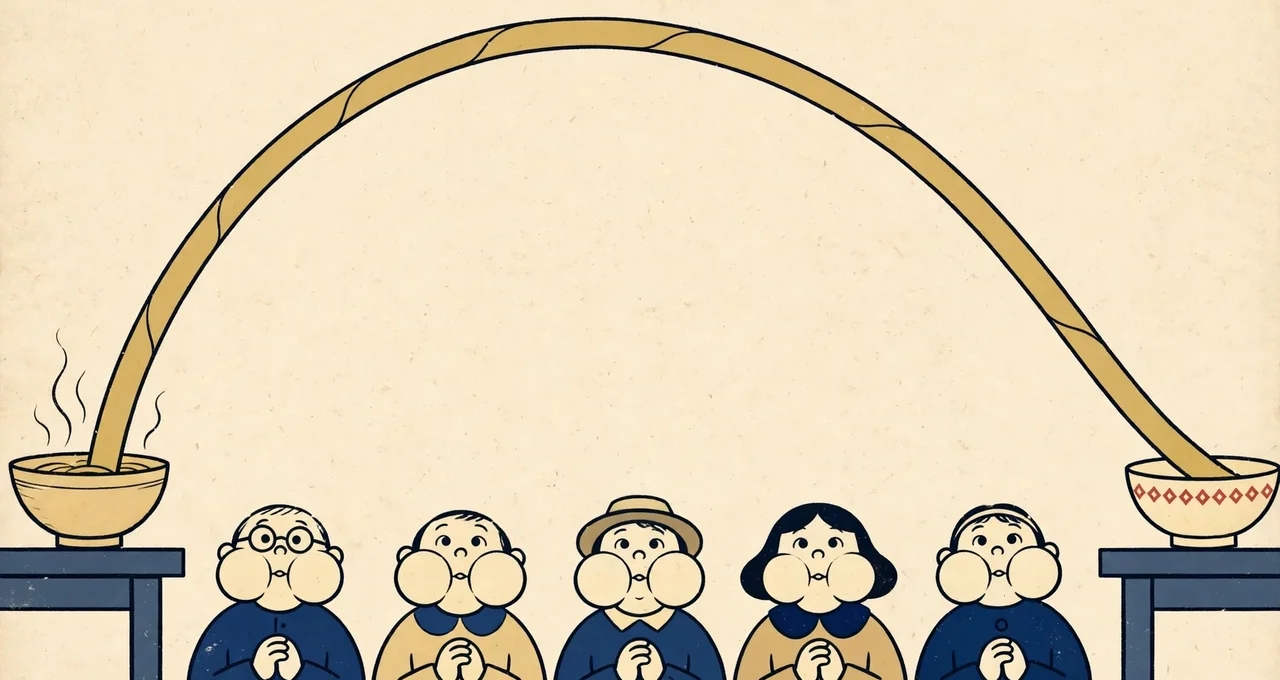
In China, longevity noodles are served long and eaten uncut, because cutting the noodle would cut the wish for a long life. Somewhere, a person has faced a single noodle of heroic length and understood the assignment.
In the Netherlands, you do not just congratulate the birthday person. You congratulate the whole family. Parents, siblings, everyone gets a handshake for a birthday they did not have, which is either very generous or a very Dutch way of saying this household survived another year together and that counts.
In Australia, kids get fairy bread, which is buttered bread covered in rainbow sprinkles, served at parties with total confidence and zero apology. It should not work as a food. It works completely as a food. Science has not caught up.
Dutch birthdays also include crown years, special ages that get a crown, and the tradition in some workplaces of bringing your own cake to work on your birthday. Read that again. On your birthday. You supply the cake. For your coworkers. The party has been fully outsourced to the guest of honor, and somehow this is presented as celebration.
Every country looked at the same event, a person getting older, and invented a completely different way to mark it, and every single one of them is certain their way is the normal way. That might be the most human fact in this entire issue.
The extra candle
Strip away the gods and the kings and the lawsuits and the bacteria, and a birthday is one small, stubborn ritual that five thousand years of history could not kill.
The church banned it in spirit. Lawyers taxed the song. Science measured what your breath does to the frosting, in percentages, and published it.
People kept lighting the candles anyway.
They kept it because the ritual does one thing perfectly, in a language a kid already speaks fluently. It takes an invisible thing, another year of a person being alive, and makes it visible. It puts it in fire, on a cake, in a dark room full of people singing badly on purpose, and then it lets the person at the center make one secret wish and blow the whole year into smoke.
That extra candle from Germany is still the best symbol in the whole story. One for every year you have lived, and one more for the year you hope comes next.
Light of life. Guard light. Extra flame in the frosting.
So light them all. Sing the free song as loudly as the room allows. Make the wish in total silence, tell nobody, and blow like the whole thing depends on one breath.
Then eat the cake anyway.