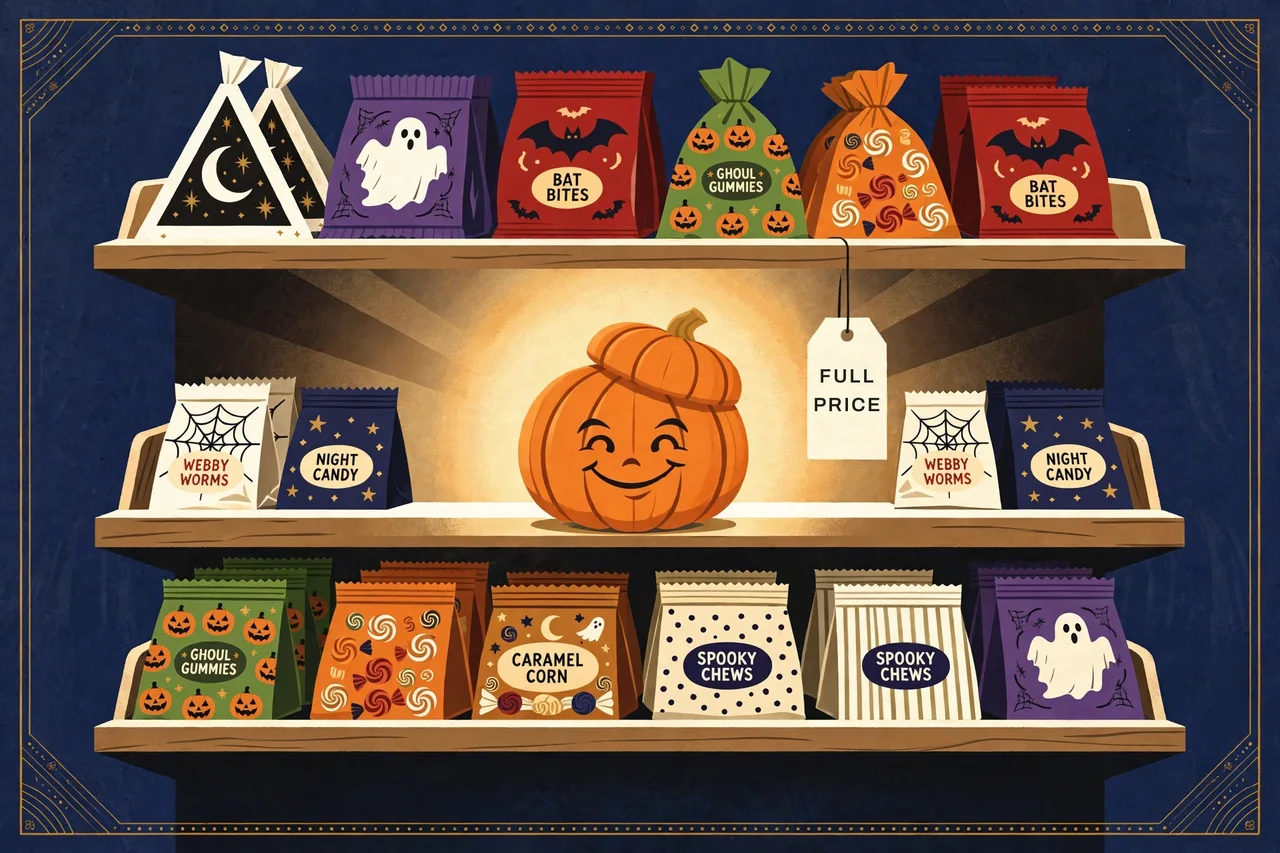
Let us begin with a bag of candy at the peak of its powers.
It is October 31, one minute before midnight. The bag sits on a store shelf at full price, and full price has never looked more justified. This year, Americans were projected to spend a record 13.5 billion dollars on Halloween, and 4.1 billion of it was candy. Ninety six percent of Halloween shoppers bought some. The candy aisle was not a shelf. It was a vault.
The candy also costs more than it used to. Grocery candy prices climbed 7.7 percent in the year to September, and here is the part the vault does not advertise: shoppers spent the record money and walked out with less. Measured by actual candy sold, Halloween sales fell 6.7 percent in the month ending October 17. Record spending, fewer pieces. The treasure was real. There was just less of it per dollar than ever.
None of that matters at midnight. Because at midnight, the bag's entire value, every cent of it, turns out to have been an appointment.
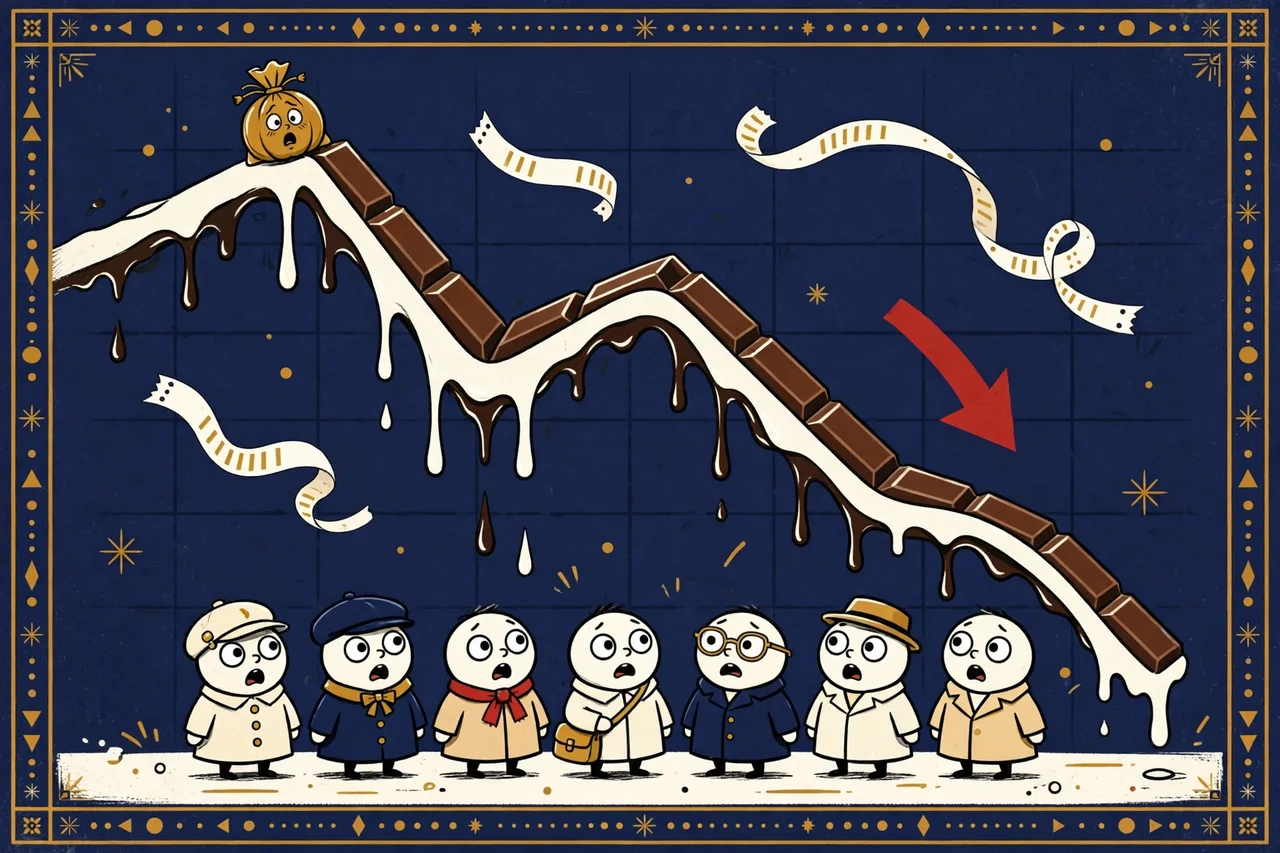
Midnight, and the floor gives way
Here is the strange machinery of the candy markdown: nobody publishes it.
No retailer releases a schedule. There is no official document that says when candy loses its value, and yet it loses its value on a timetable so reliable that deal trackers reconstruct it every year the way sailors reconstruct weather. It goes like this.
On November 1, decorations and costumes drop to about half price. The candy does not. The candy is held a step behind, around 30 percent off at Target, as if the store is still negotiating with it. As if the candy has a lawyer.
The decorations have no lawyer. The decorations go straight to the bottom.
By day three or four, the store gives up the negotiation. Seventy percent territory. Candy at 50 to 70 percent off. Last year, trackers caught Walgreens candy scanning at 80 percent off by November 4, the deepest price anyone found, a chocolate bar priced like it had been caught doing something.
By day five to seven, decorations hit 90 percent off. Candy, stubborn to the end, usually caps around 70. And whatever is left after the last markdown gets pulled off the shelf entirely and sent to salvage, which is the retail word for the place products go when even a discount cannot save them.
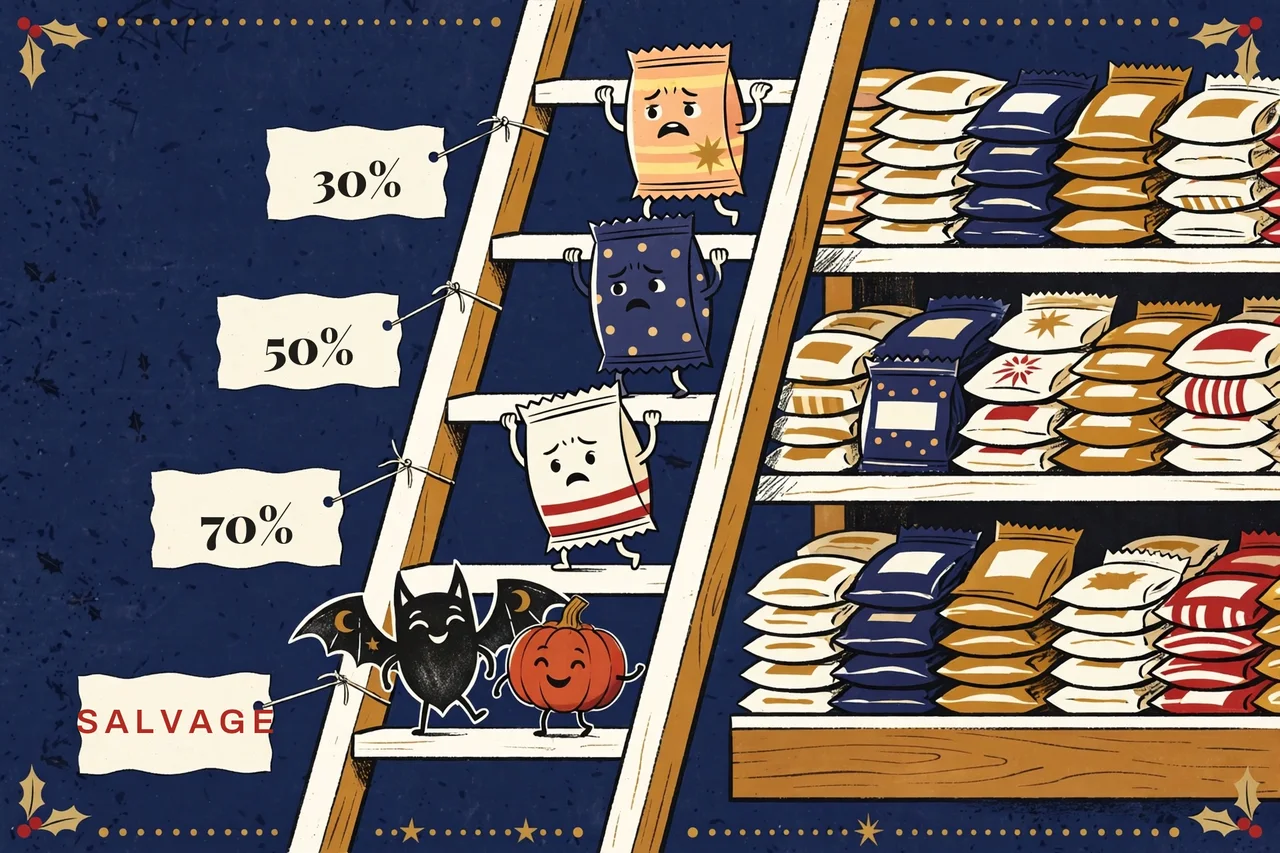
One week. Full price to salvage. The candy inside the bag cannot tell the difference. A peanut butter cup has no opinion about November. Its value was never in the bag. It was on the calendar, and the calendar flipped.
The professionals arrive on day three
There is a class of shopper who treats this week the way traders treat a falling stock.
They do not buy candy on Halloween. Buying candy on Halloween is, to them, what buying an umbrella in a hurricane is to everyone else: technically allowed, emotionally indefensible. They wait. They watch the ladder. They arrive on day three with carts, plural, and they load up on distressed assets shaped like pumpkins.
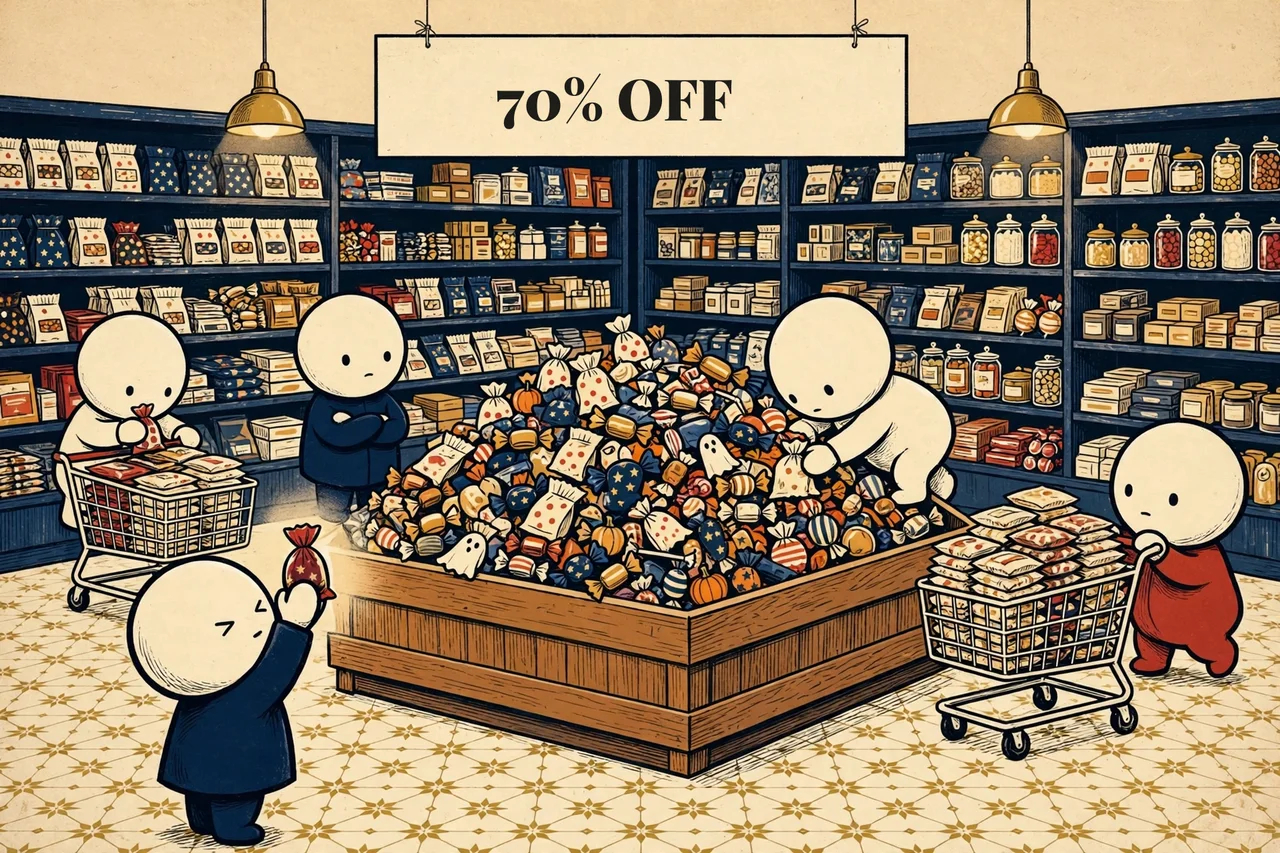
These shoppers are not cheap. They are early to a sale the store has not finished admitting it is having. The store marks the candy down in stages because some of it will sell at every stage, and the professionals know the stages the way you know the stops on your own street. Thirty. Fifty. Seventy. They can hear a price scanner the way other people hear weather coming.
The candy, meanwhile, sits there being exactly what it was on October 31. Wonderful. Identical. Doomed.
A brief hearing for the candy corn
No account of this collapse is complete without the candy corn, which holds its annual celebration the day before the fall.
October 30 is National Candy Corn Day. The nation produces about 35 million pounds of the stuff a year, roughly 9 billion kernels, and one maker, Brach's, accounts for about 85 percent of all candy corn sold. Candy corn began in the 1880s as a harvest novelty sold under the name Chicken Feed, which tells you everything about its original ambitions. It was farm decor you could eat. Then it got promoted to a one-night candy, given a national day, and seated at the head of the table.
For exactly one day.
We like to imagine the kernels holding a small press conference on October 30. Flags. Microphones. A statement about strong fundamentals. Nine billion kernels, record confidence, no questions taken. Twenty four hours later, they are in the same bin as everything else, 70 percent off, learning what every October celebrity learns in November.
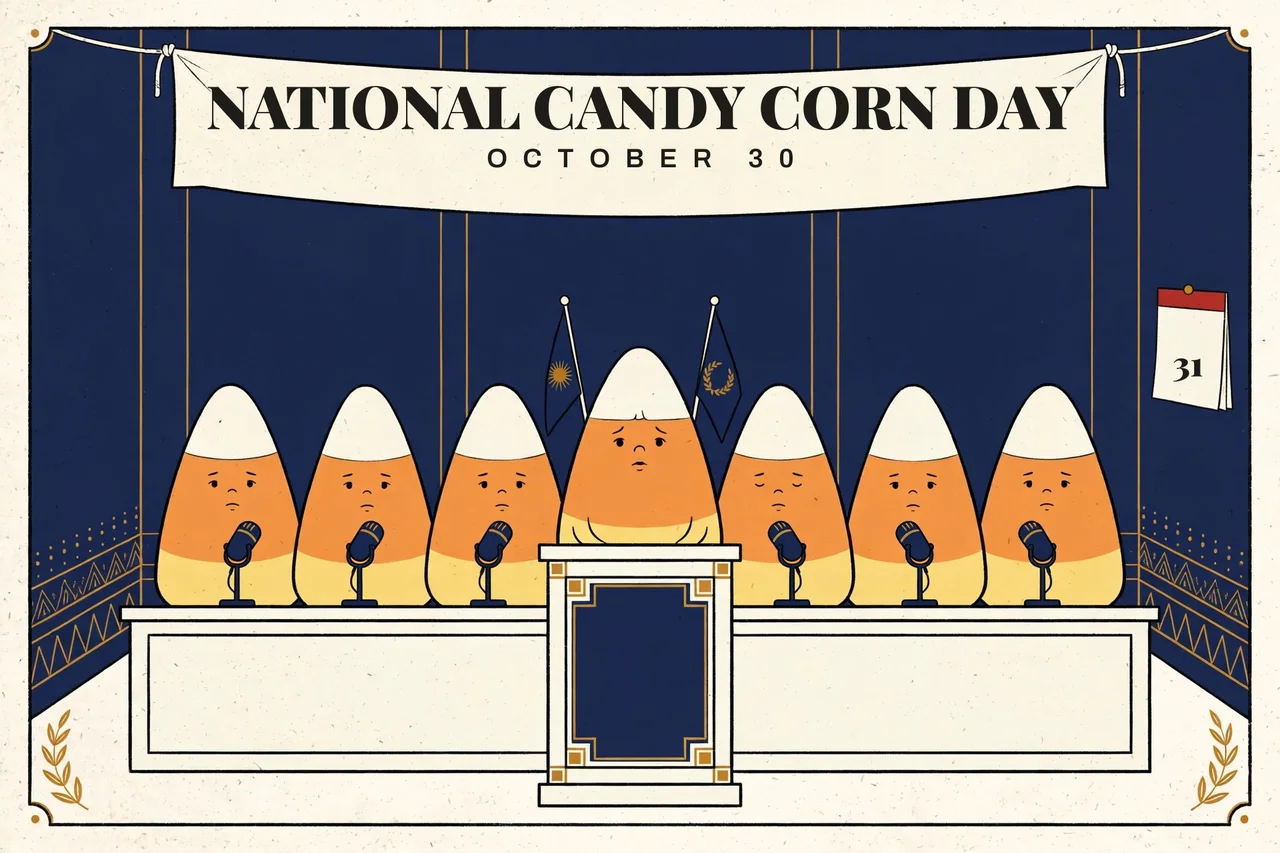
The candy corn did nothing wrong. That is the whole story of this market. Doing something wrong is not required. The date is sufficient.
Hershey is not worried, and here is why
Somebody, you might think, must be losing money on all this. Somebody is. It is just not the people whose names are on the wrappers.
Hershey ships its Halloween candy to stores in the summer and books the revenue then. By the time the first stamp of the markdown lands in November, the makers were paid months ago. The crash belongs entirely to the stores that ordered the candy and the candy that got ordered. The manufacturer watches the collapse the way a landlord watches weather in a town he moved out of in August.
So the losses flow downhill to the shelf, and the shelf does the only thing it can do. It negotiates with the public, in public, using the public's favorite language: percentages, rising daily, until the public agrees to carry the problem home.
The afterlife, which is better than the salvage bin
And yet. Some of this candy escapes.
Every November, dentists around the country run candy buybacks, a tradition the organized version of which traces to 2005: kids haul in their haul, the office weighs it, and the traditional rate is a dollar a pound. The candy is not destroyed. It is rerouted, into care packages and charity routes, which means a fun size bar can go from a pumpkin bucket in Ohio to a soldier overseas without ever being eaten by the person who collected it. Dentistry's position on candy, officially, is that it should travel.
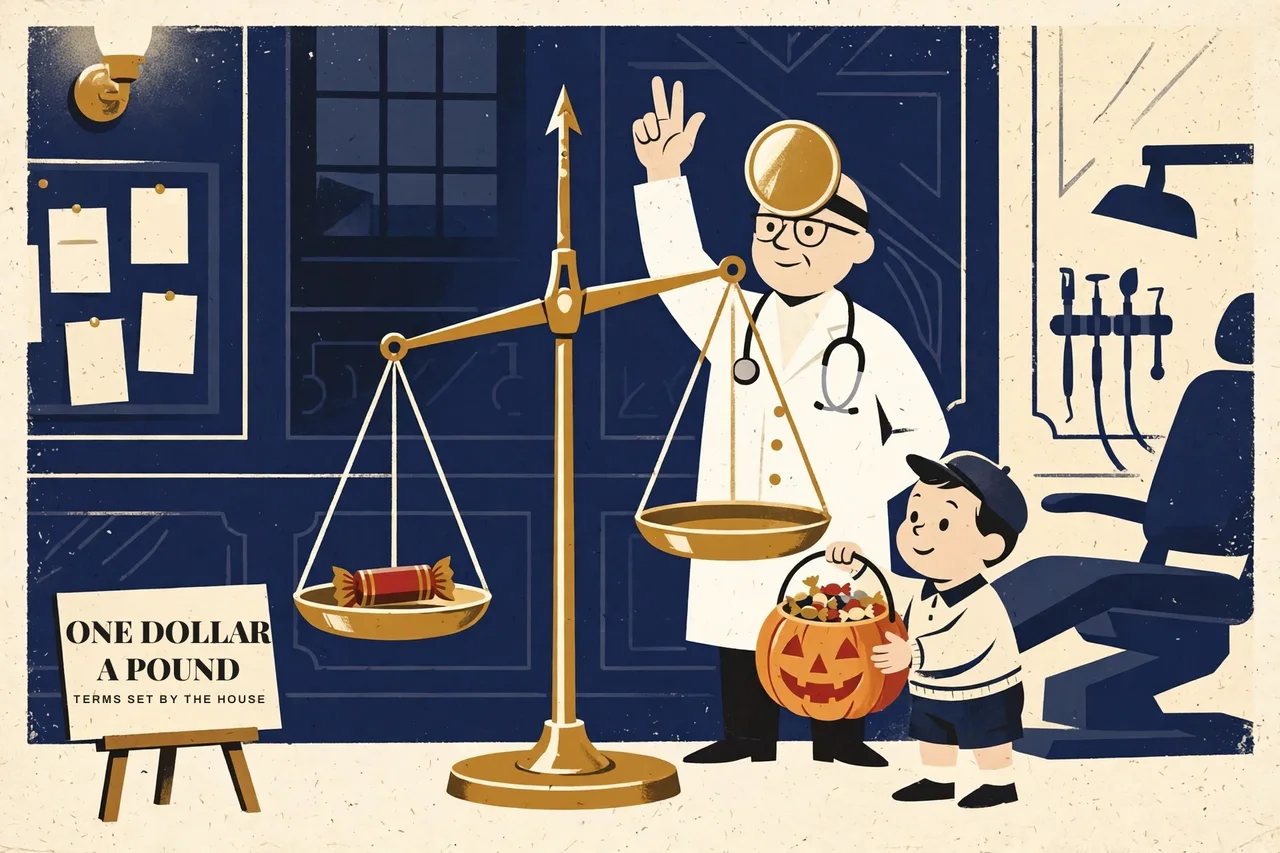
The buybacks are quieter than they were. For years, much of the collected candy flowed to Operation Gratitude, which at its peak received over 500,000 pounds of candy a year. Operation Gratitude has since closed the candy pipeline, citing the logistics of moving that much sugar around the world, and its absence is one reason fewer dentists run a scale in November than used to.
The road did not close. It moved. This November, the main route runs through Soldiers' Angels and its Treats for Troops program: collection sites around the country, findable on a candy map, taking up to ten pounds of candy per family, with sites shipping their collections by November 30. The candy goes to military bases, VA hospitals, Guard and Reserve units, and care packages for deployed troops. Many of the collection sites are, pleasingly, dental offices. The scale survived. It just changed management.
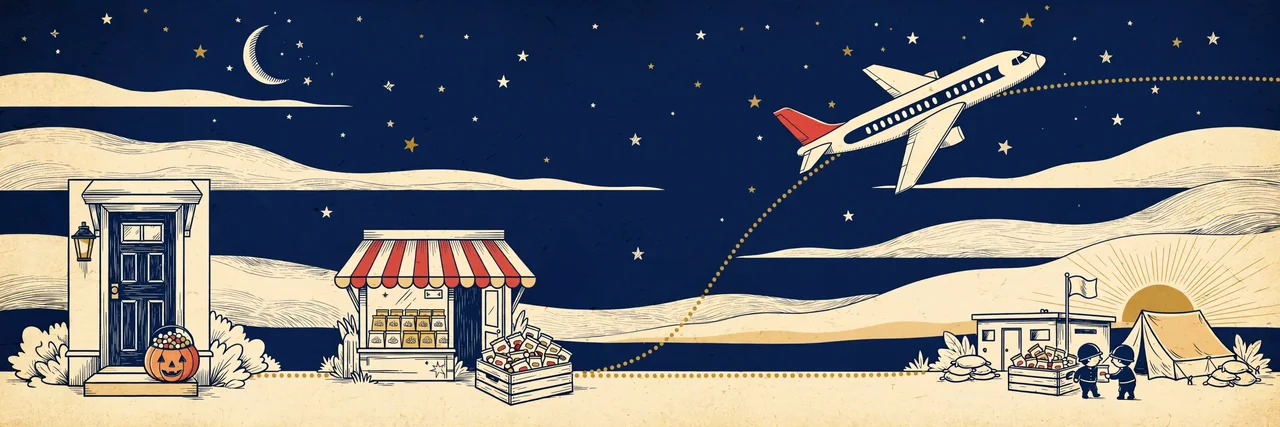
Consider the full journey available to a single fun size bar. Manufactured for one night. Shipped in summer. Guarded like treasure in October. Marked down three times in a week. Weighed by a dentist. Flown to a base overseas. At no point in this journey is the bar itself any different than it was on the truck.
The candy is exactly the same
That is the finding of this investigation, and it is not really about candy.
A thing can be treasure on Tuesday and salvage on Monday with no change in the thing. Price is not a property of objects. Price is a date wearing a number. The pumpkin on the wrapper was never the product. The product was October 31, and October 31 is the one thing the store cannot keep in stock.
So if you are standing in the aisle this week, holding a bag that costs a third of what it cost on Saturday, do not ask what is wrong with it. Nothing is wrong with it. Ask what day it is.
The candy is exactly the same. Check the calendar before you check the bag.